July was a particularly intense month for the MOVE4D team.
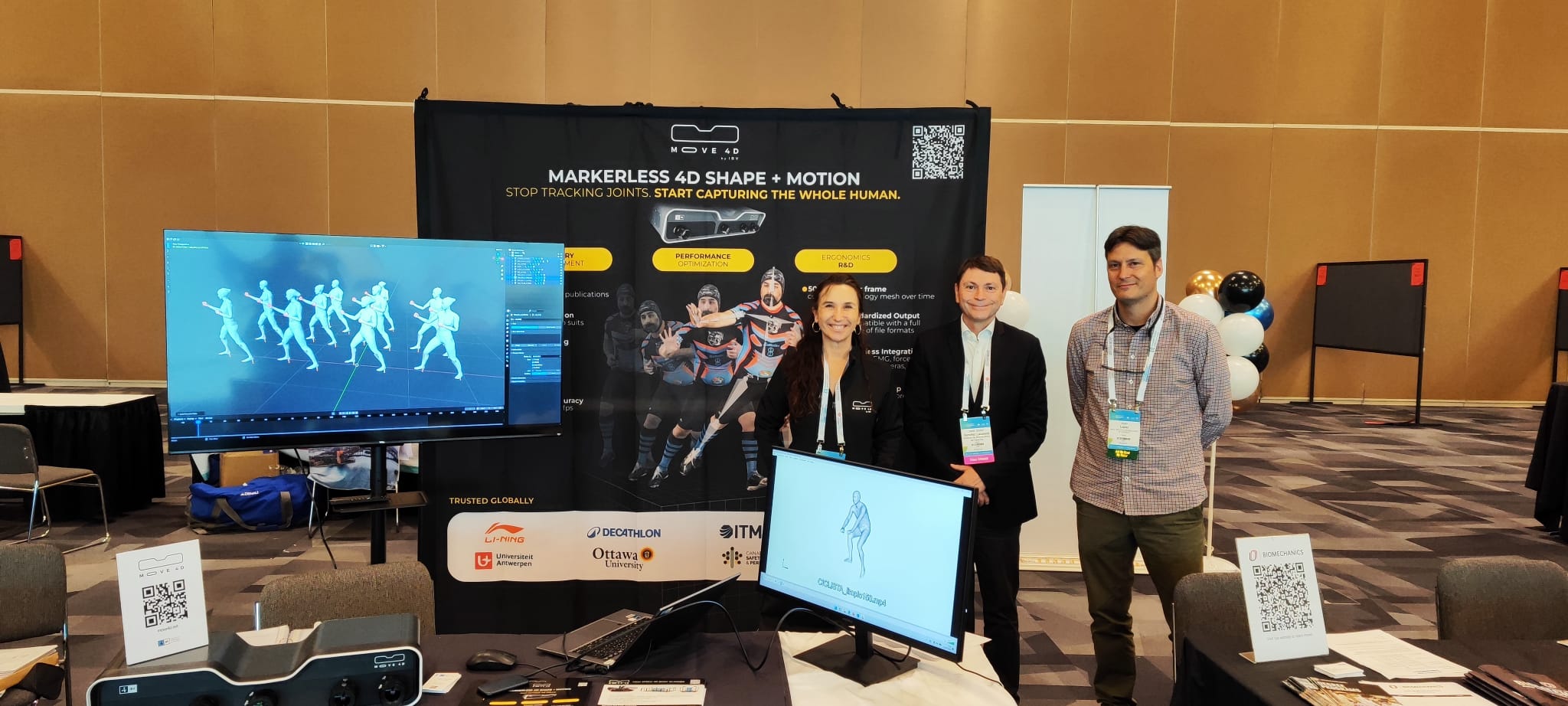
Within just a few weeks, our colleagues Mario Lamas, Postdoctoral Researcher at the Institute of Biomechanics (IBV), and Carmelo Lizarraga, Business Development Manager, represented MOVE4D at two major international meetings for sports science and biomechanics:
- 31st ECSS Annual Congress in Lausanne and,
- 44th ISBS Conference in Loughborough.
While both events varied in scope and audience, a central question dominated conversations with researchers and performance specialists:
How can we capture richer, more meaningful information about human movement without increasing the burden on athletes and researchers?
That question is becoming increasingly relevant as sports biomechanics moves towards richer datasets, more natural testing conditions and technologies that can be integrated more easily into research and performance environments.
ECSS 2026: looking at human performance from a broader perspective
From 7 to 10 July, ECSS Lausanne 2026 brought the European College of Sport Science Annual Congress back to the Olympic Capital after a 20-year absence.
Hosted through a collaboration between the University of Lausanne (UNIL) and EPFL at the SwissTech Convention Center, the congress brought together the international sports science community around research, technology and human performance.
For MOVE4D, Lausanne was an opportunity to demonstrate what markerless 4D body scanning can add to this conversation.
Traditional biomechanics has generated enormous value by analysing anatomical landmarks, trajectories and joint kinematics.
However, representing an athlete through a limited set of points can leave part of the movement unexplored:
- how body shape changes during an action,
- how soft tissues deform or
- how the complete external surface evolves over time.
At the MOVE4D booth, Mario and Carmelo demonstrated how the system captures the complete 3D body surface dynamically and without attaching markers to the participant.
This provides researchers with a new layer of morphofunctional information that complements the kinematic perspective already fundamental to biomechanics.
The objective is not to replace established biomechanical methods, but to complement them with information that has traditionally been difficult to capture simultaneously.
This idea led to discussions with researchers and professionals interested in sports performance, movement analysis and new research protocols.
It also reflected a broader trend: researchers are looking for ways to collect richer data while reducing preparation time, instrumentation and interference with natural movement.
You might be interested in: How accurate is a 4D body scanner compared with marker-based systems for gait analysis?
And because sports science goes beyond the conference hall, Mario and Carmelo also took part in the Bengt Saltin Charity Run, combining work, sport and the community spirit of the week in Lausanne.

ISBS 2026: markerless motion capture at the heart of sports biomechanics

Later that month, from 27 to 31 July, the focus shifted to Loughborough University for the 44th International Society of Biomechanics in Sports Conference.
ISBS 2026 became the largest conference in the Society’s history, welcoming 609 delegates and featuring 388 peer-reviewed presentations.
Its programme covered academic and applied aspects of sports biomechanics, including performance and injury-related biomechanics, equipment, technology, advanced methodology and education.
This made Loughborough a particularly relevant environment in which to discuss how motion capture itself is evolving.
During scientific sessions, technology demonstrations and conversations at the MOVE4D stand, one trend became especially clear; markerless capture is moving from an emerging alternative towards an increasingly established part of the biomechanics toolkit.
But removing markers is only part of the story.
A second topic repeatedly emerged, soft tissue dynamics.
Don’t miss our article: 3D scanning analysis of soft tissue movement in running: insights from Move4D under fatigue conditions
The human body is not a rigid mechanical structure. Muscles, skin and other soft tissues change shape during running, cycling, jumping and other sporting actions.
Understanding these deformations alongside conventional joint kinematics can provide researchers with a more complete representation of the athlete in motion.
These were also the two main takeaways highlighted by Carmelo after ISBS:
- the acceleration of markerless adoption and,
- the growing relevance of incorporating soft-tissue deformation into biomechanical analysis.

From joint trajectories to the complete moving body
This is precisely where 4D body scanning introduces a different perspective.
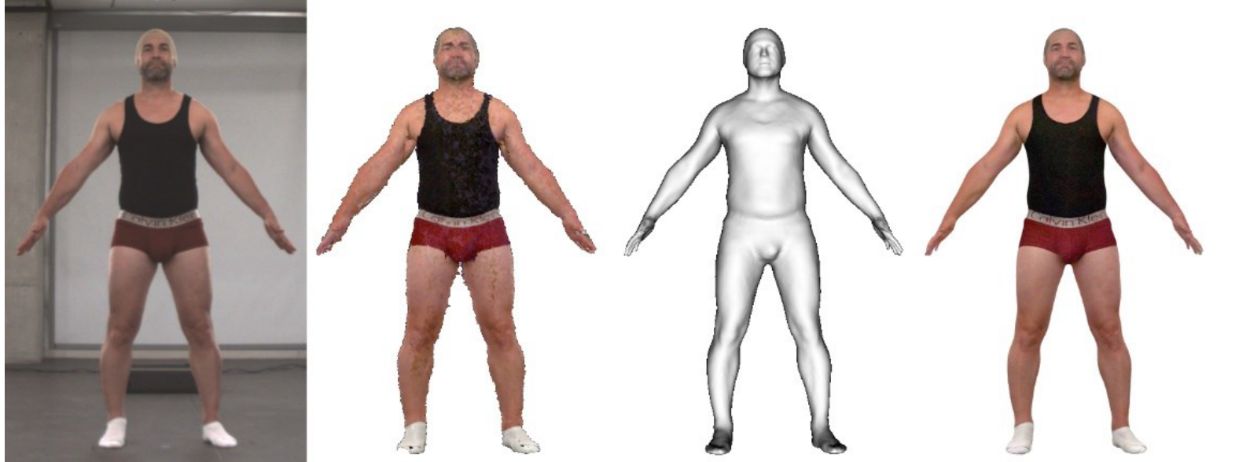
MOVE4D combines high-precision body scanning with dynamic motion capture to reconstruct the body surface over time.
Instead of analysing movement exclusively through anatomical landmarks, researchers can work with complete and temporally consistent 3D models of the person throughout a movement.
The result connects two dimensions that have traditionally been difficult to observe together, movement and morphology.
This opens the door to studying:
- dynamic body shape
- surface deformation
- soft-tissue behaviour
- morphofunctional changes
All of that behaviour while simultaneously analysing movement and without requiring markers to be placed on the athlete before capture.
For sports laboratories, reducing preparation and participant instrumentation can also facilitate repeated measurements and help researchers capture movement under conditions closer to the athlete’s natural behaviour.
Keep reading: MOVE4D at WCB 2026: Capturing movement is no longer enough
One direction for sports biomechanics
ECSS and ISBS approached sports science from different perspectives, but the conversations MOVE4D encountered in Lausanne and Loughborough pointed in the same direction.
The next generation of motion analysis will not only be about measuring movement, but about understanding more of what the body is doing while making measurement less intrusive.
Markerless technologies are removing some of the friction associated with conventional motion capture.
Dynamic 4D body scanning adds another dimension by capturing information about the complete body surface and how it changes throughout movement.
For MOVE4D, July was therefore more than two opportunities to demonstrate a technology. It was a chance to listen to the researchers, practitioners and sports performance specialists who are defining the next questions in biomechanics.
And one message came back particularly strongly, capturing movement is important. Understanding the complete body in motion is the next challenge.
Would you like to explore what MOVE4D could bring to your sports biomechanics research?
Our team can help you explore how markerless 4D body scanning could be integrated into research protocols, sports performance studies or human movement analysis.
Contact the MOVE4D team and tell us what you need to measure, analyse or understand.