From 11 to 15 July 2026, Vancouver welcomed nearly 3,000 researchers, professionals and companies for the 10th World Congress of Biomechanics, one of the world’s leading events dedicated to biomechanics and human movement.
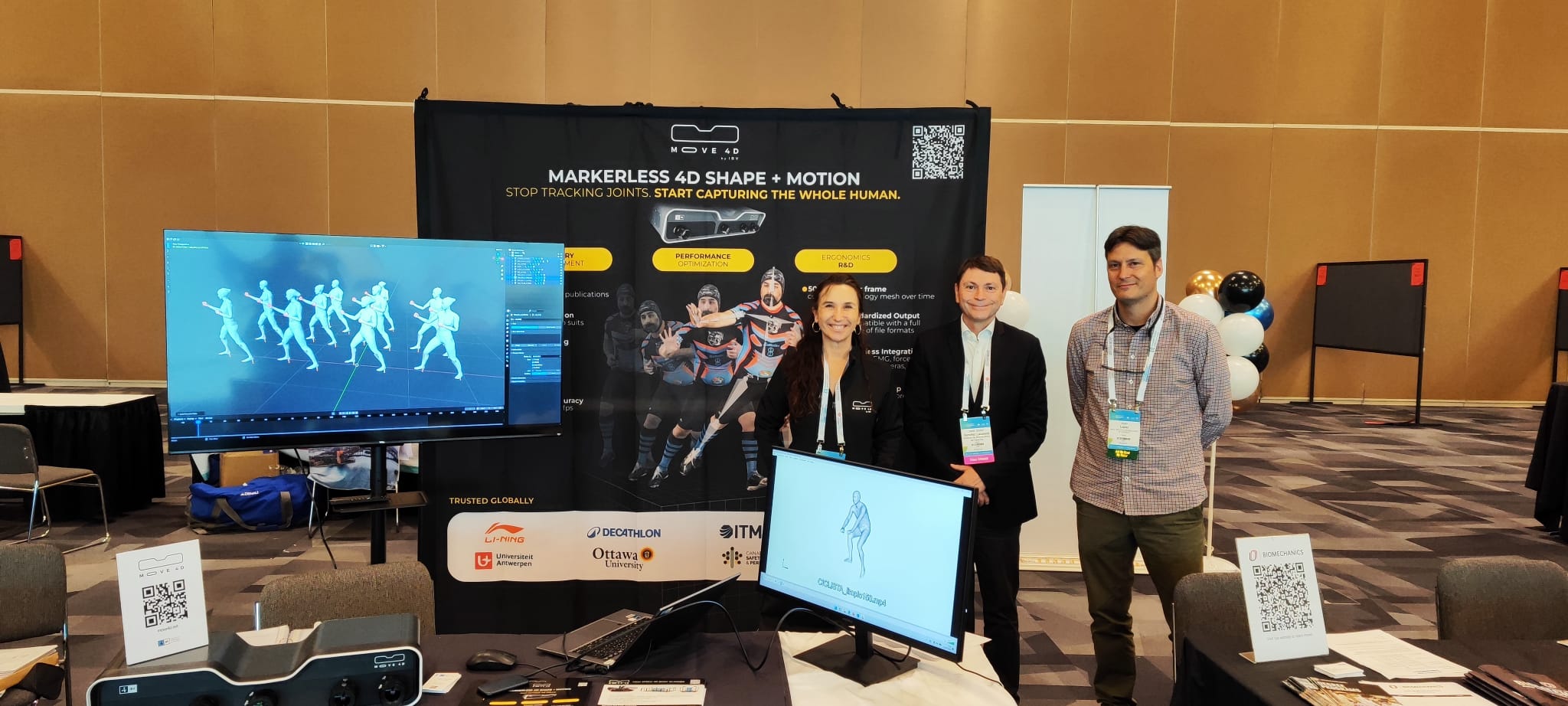
With a programme spanning clinical biomechanics, gait analysis, rehabilitation, tissue engineering, artificial intelligence and medical devices, MOVE4D attended the congress with its own exhibition space and a scientific contribution presented by the Instituto de Biomecánica (IBV) team.
WCB 2026 was an opportunity to present the latest developments behind MOVE4D, but it was also a place to listen, exchange ideas and connect with an international community that is rethinking how the human body should be observed, measured and understood in motion.
Why capture just the movement when you can capture the complete human?
This question shaped MOVE4D’s presence in Vancouver:
Why capture just the movement when you can capturethe complete human?
Biomechanics has traditionally analysed movement through anatomical landmarks, markers and trajectories.
These measurements remain essential, but they only represent part of what happens when a person walks, runs, jumps or performs any other movement.
A full understanding of human movement requires us to look beyond isolated points. It also requires us to observe how body shape, volume, tissues and surface morphology change over time.
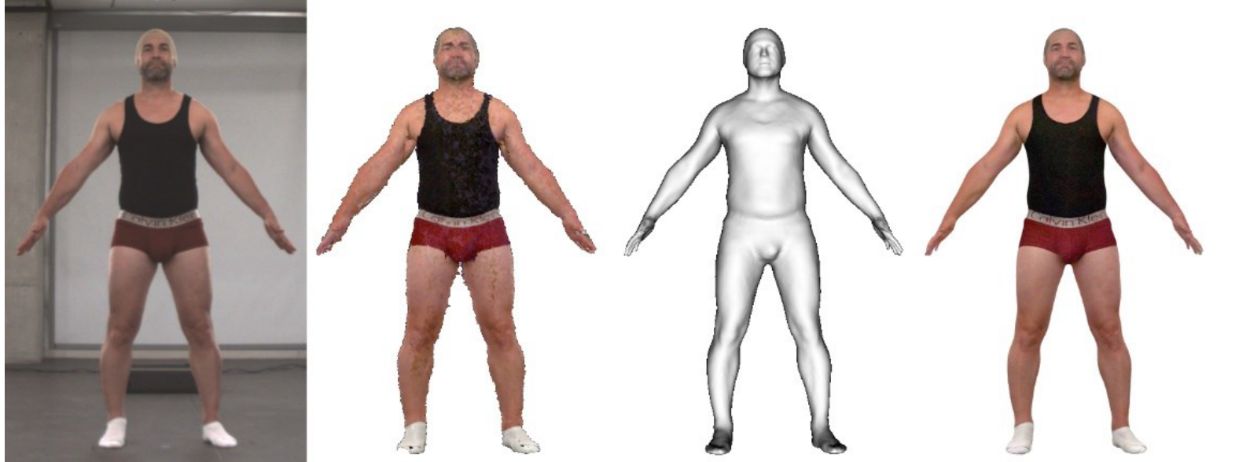
MOVE4D captures these variables simultaneously, without placing markers on the participant, and generates complete, consistent 3D body models for every instant of a movement.
This approach opens up new possibilities for:
- biomechanics research,
- clinical assessment,
- sports performance,
- ergonomics,
- dynamic anthropometry,
- and human-centred product design.
Addressing one of the most complex challenges in kinematic analysis
Alongside the demonstrations and conversations at Booth TT2, Juan López Pascual (Head of Biomechanical Engineering and Human Functions Research at IBV), presented the scientific poster:
“Reduction of Cross-talk in Lower Limb Secondary Joint Angles with Motion Capture based on Dynamic 3D Scanning”.
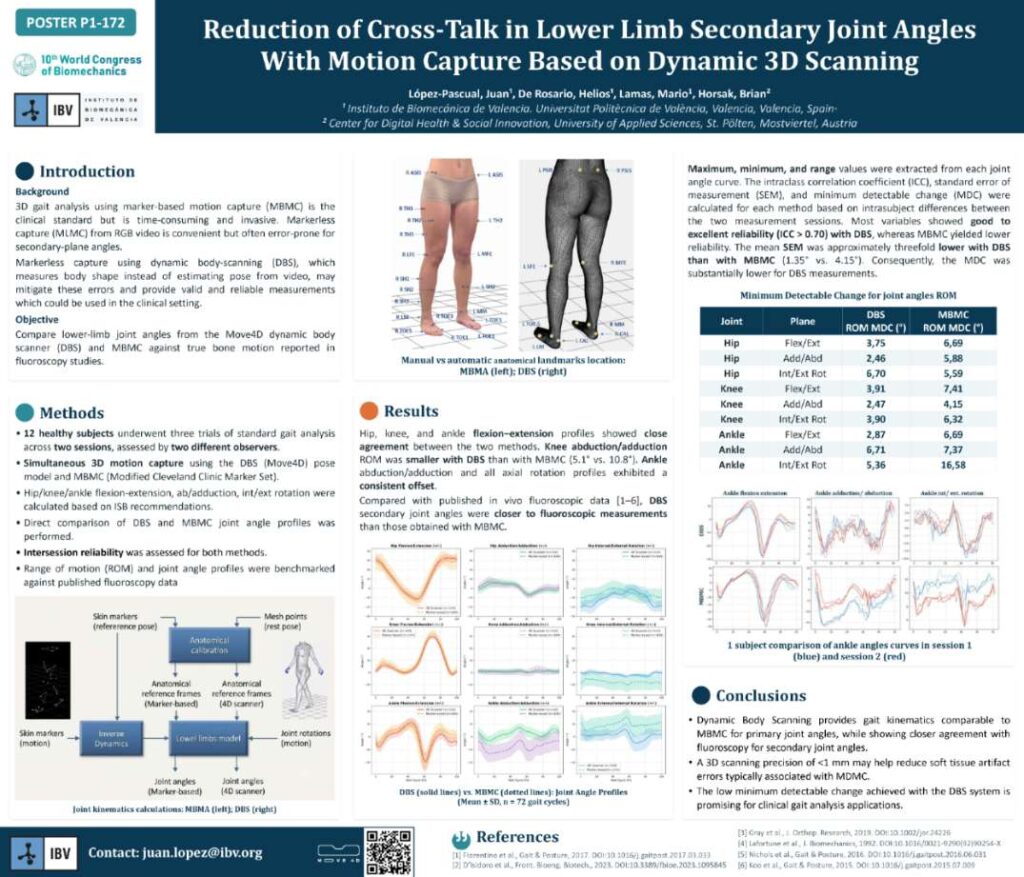
The research explored a question that is highly relevant to anyone working with markerless motion-capture systems: can Dynamic Body Scanning help reduce errors when calculating joint angles in secondary planes?
Kinematic cross-talk occurs when movement recorded in one plane unintentionally affects measurements in another. It remains one of the most challenging issues when analysing three-dimensional joint kinematics.
The findings presented in Vancouver showed that replacing point-based marker clusters with dynamic, watertight 3D surface meshes can significantly reduce cross-talk in secondary joint planes.
The results also indicated that Dynamic Body Scanning can provide gait kinematics comparable to marker-based systems for primary joint angles, while showing closer agreement with fluoroscopy for certain secondary-plane angles.
In addition, sub-millimetre 3D scanning precision may help reduce errors typically associated with soft-tissue artefacts.
Together, these results highlight the potential of MOVE4D to provide cleaner and highly repeatable kinematic data for clinical, sports and research applications.
You might be interested in: How accurate is a 4D body scanner compared with marker-based systems for gait analysis?
The “wow” moment is only the beginning
Seeing MOVE4D for the first time usually creates an immediate reaction. Watching a complete three-dimensional representation of the body evolve during movement is visually striking and naturally sparks curiosity.
But that first “wow” moment is only the beginning.
The most valuable conversations start with the questions that follow:
How accurate is it?
MOVE4D’s accuracy has been evaluated through scientific studies and peer-reviewed publications, allowing its results to be compared with established reference systems.
What information can it provide that I could not access before?
Beyond joint kinematics, MOVE4D makes it possible to investigate dynamic morphology, asymmetries, surface deformation and soft-tissue behaviour during movement.
Which real-world problems can it help solve?
The answer depends on the field and the research question. It may involve:
- assessing pathological gait,
- studying an athlete’s performance,
- analysing the interaction between the body and a garment,
- or designing a more ergonomic workplace.
This is where the discussion moves beyond the technology itself and becomes a process of co-creation.
The MOVE4D team works with each organisation to identify new variables, methodologies and use cases that respond to its particular challenges.
More than 80 new connections across the global community
Over the five days of the congress, the MOVE4D team established more than 80 new professional contacts with researchers and specialists from international universities, hospitals, technology centres and companies.
The organisations represented in these conversations included Harvard University, MIT, Yale University, the University of Michigan, KU Leuven and The Hong Kong Polytechnic University, as well as sports, technology and human-centred design companies such as lululemon, Arc’teryx, Össur and Qualisys.
WCB 2026 was also an opportunity to reconnect with researchers and collaborators who are becoming familiar faces within the MOVE4D community.
Among them were members of the Interuniversity Centre of Bioengineering of the Human Neuromusculoskeletal System (IUC Bohnes), an international network to which IBV belongs. These encounters show how conversations initially sparked by a new technology can gradually develop into long-term scientific relationships and shared research interests.
Complementary perspectives in Vancouver
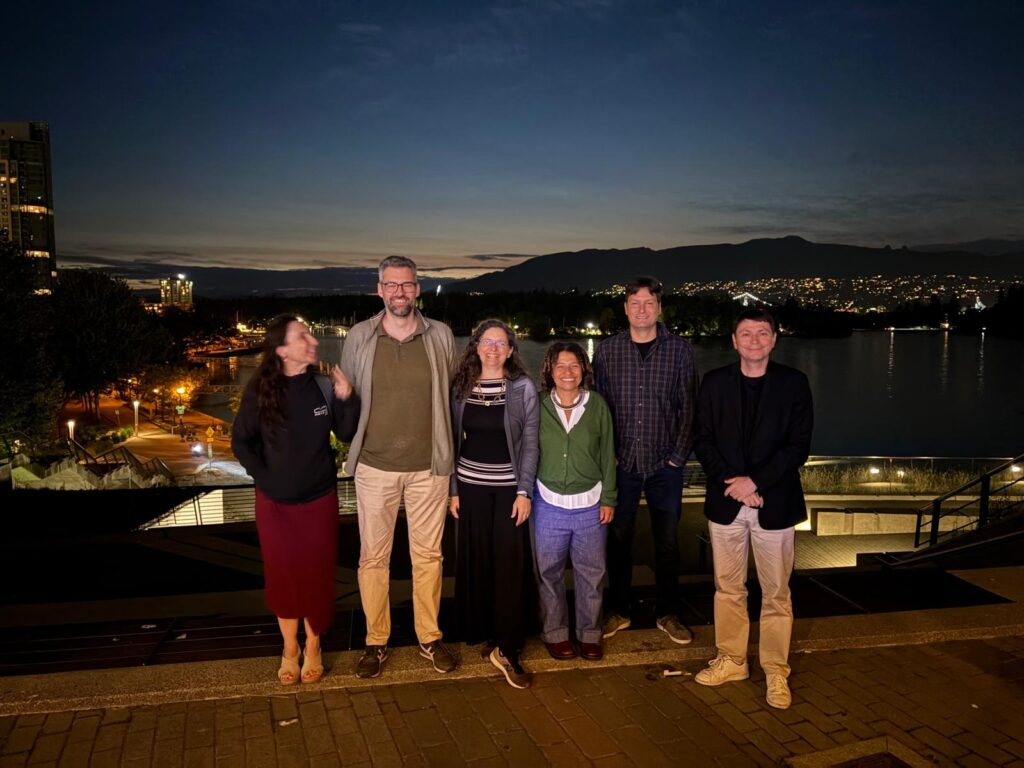
MOVE4D was represented at the congress by Rosa Porcar Seder (Technology Business Director), Javier Sánchez Lacuesta (Director of IBV), and Juan López Pascual (Head of Biomechanical Engineering).
Bringing together scientific, technological and strategic perspectives allowed the team to do more than present results.
It also created space to understand the needs of the international biomechanics community, identify new areas of research and explore where applied biomechanics is heading next.
WCB 2026 confirmed that the future of motion analysis is about building a more complete, accurate and useful representation of the human body.
For MOVE4D, being in Vancouver meant taking an active role in that conversation, presenting scientific evidence, sharing applications and working alongside the people who are defining the next frontiers of biomechanics.
Would you like to explore what MOVE4D could bring to your research?
Our team can help you investigate how Dynamic Body Scanning and 4D capture could be applied to projects in clinical biomechanics, sports, ergonomics, anthropometry or product design.
Contact the MOVE4D team and tell us what you need to measure, analyse or understand.