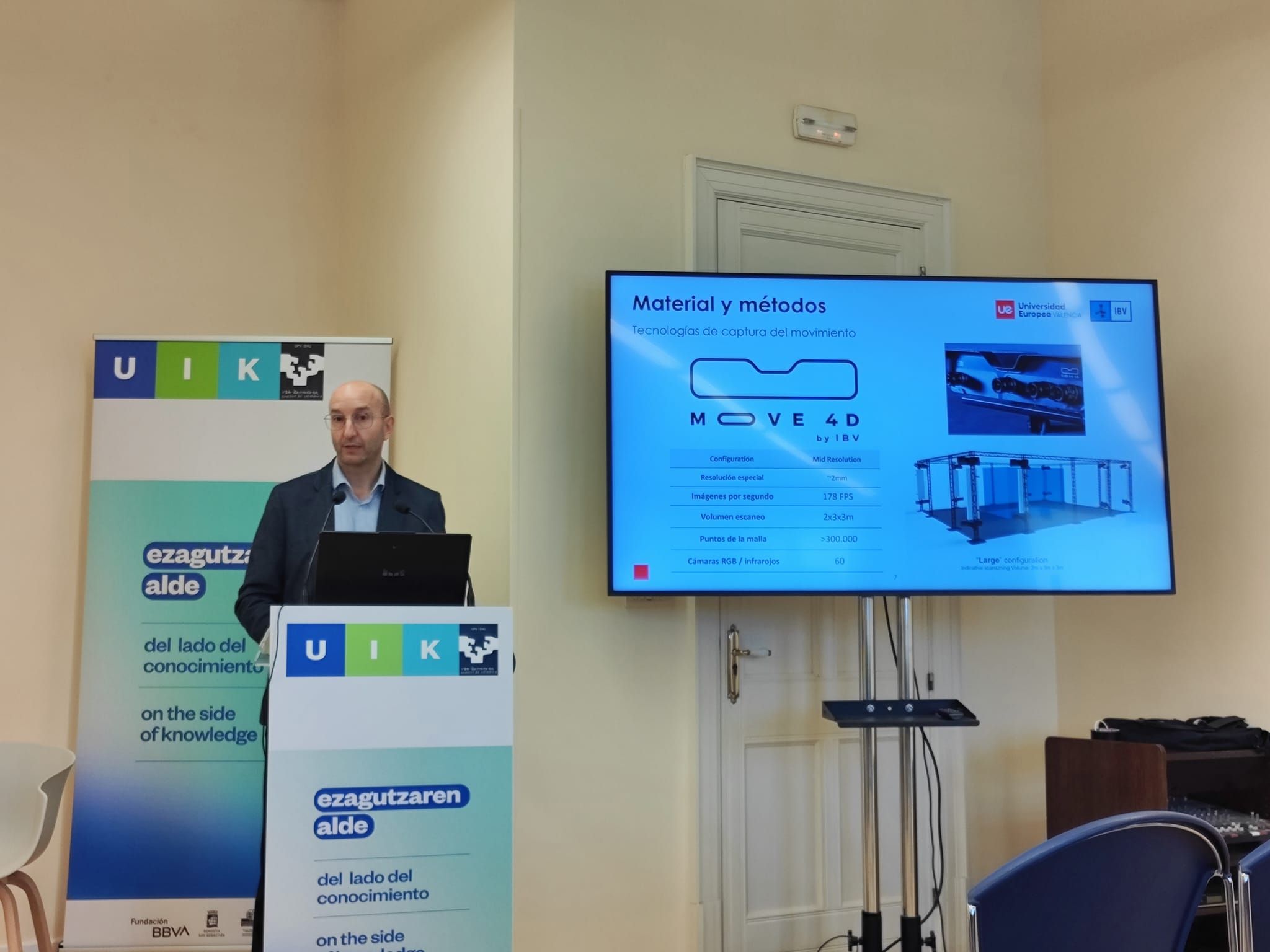
The XLVII International Congress of the Iberian Society of Biomechanics and Biomaterials (SIBB 2025) took place on 6–7 November 2025 at the University of the Basque Country. Javier Gámez Payá, a researcher at the Institute of Biomechanics, presented the pilot study “3D Scanning Technology to Analyze Soft Tissue Movement Under Fatigue in Running.”
Discover the key takeaways from this research conducted using MOVE4D motion scanning technology.
Background that motivated this research
- Fatigue is a condition that causes changes in running biomechanics.
- It has been observed that footstrike technique leads to differences in some kinetic and kinematic variables.
- Rearfoot strike (RFS) is associated with a higher vertical load
- Soft tissue vibrations during running contribute to neuromuscular fatigue
- Optimizing running technique and minimizing energy loss due to soft tissue movement can improve performance.
About this research
The work, conducted with co-authors J. Pérez Maletzki, A. Ballester, S. Alemany, and A. Remón, explored how high-resolution dynamic scanning can provide new insights into soft tissue motion during running, particularly under fatigue conditions.
Fatigue is a key factor influencing running biomechanics. As fatigue develops, runners experience changes in kinematic and kinetic variables that affect efficiency, load distribution, and potentially injury risk.
Despite this, soft tissue behavior—particularly in the thigh—has traditionally received limited attention, even though it plays a major role in impact absorption and mechanical energy dissipation.
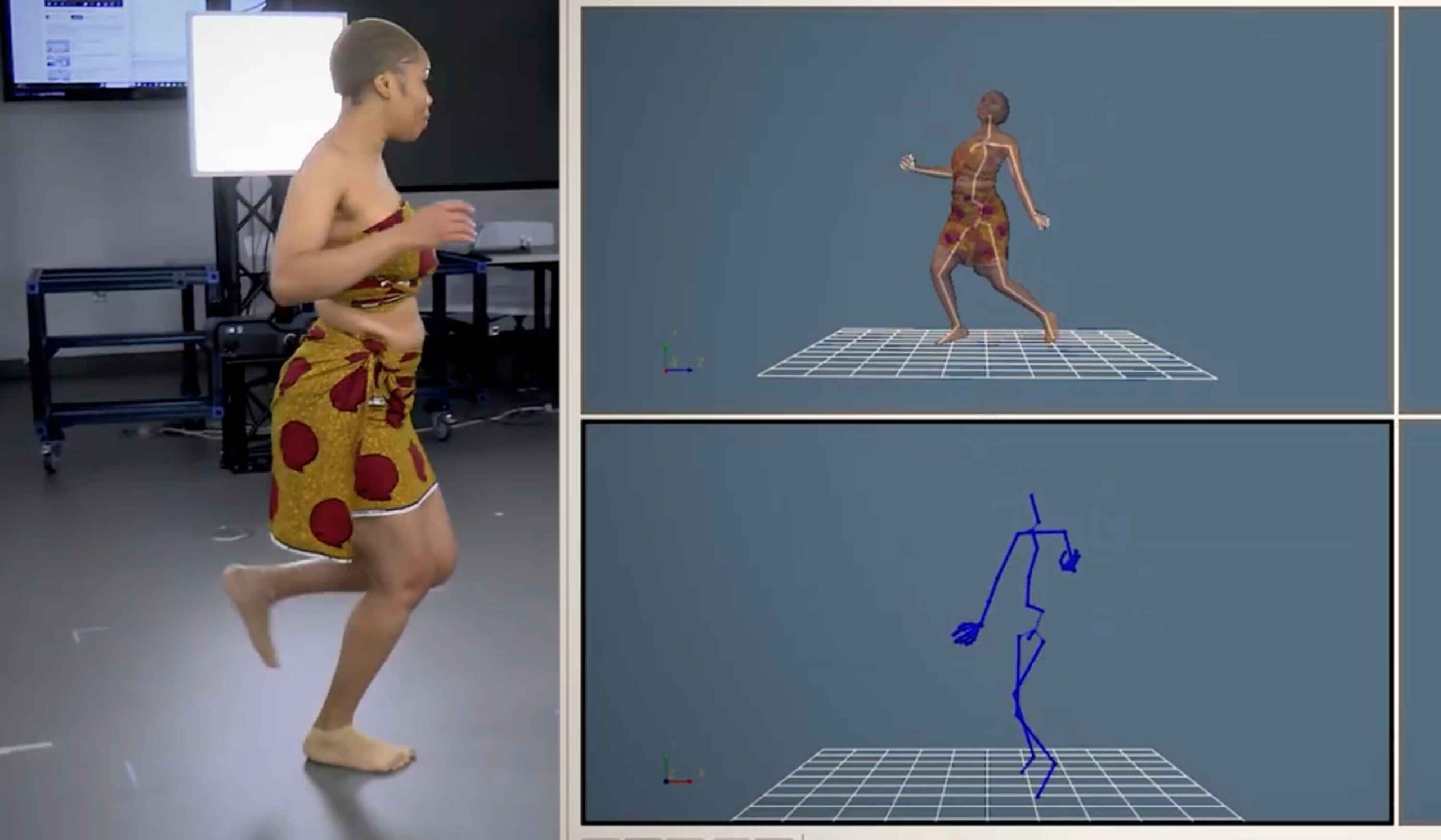
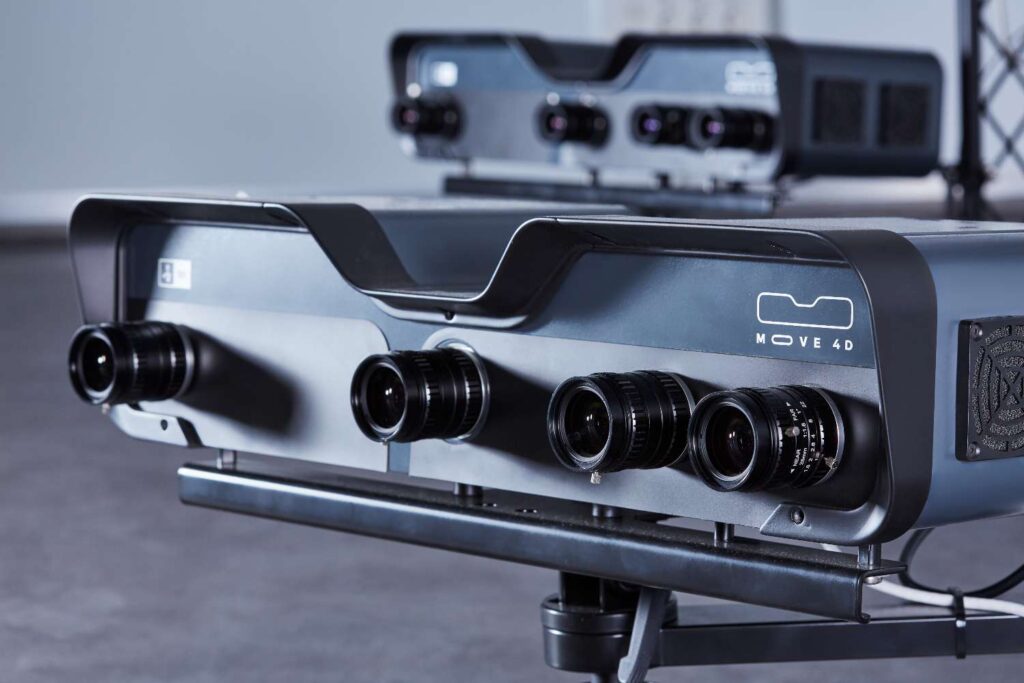
High-resolution dynamic 3D scanning technologies such as Move4D, from IBV, provide a unique opportunity to analyze real soft tissue motion during running, including under fatigue conditions, offering insights that are difficult to obtain with conventional biomechanical tools.
Objectives
- Analyze soft tissue movement in the thigh under two different running techniques.
- Analyze the effect of fatigue on thigh soft tissue movement.
Hypotheses
- Rearfoot strike running generates greater thigh soft tissue movement.
- Fatigue increases thigh soft tissue movement.

Move4D body scanner applied to running analysis
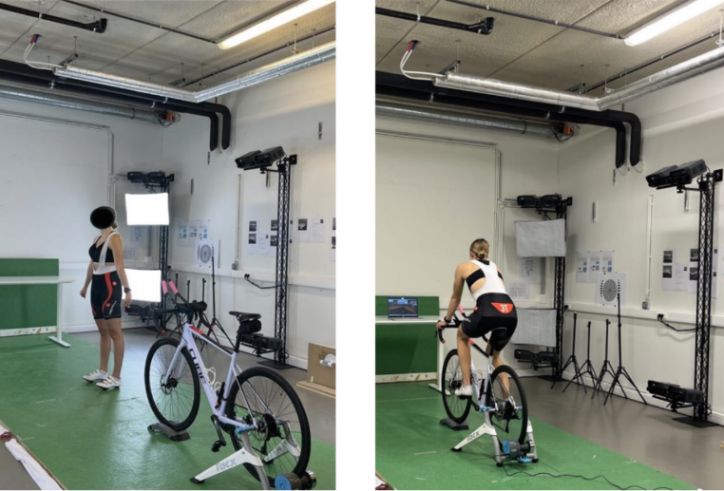
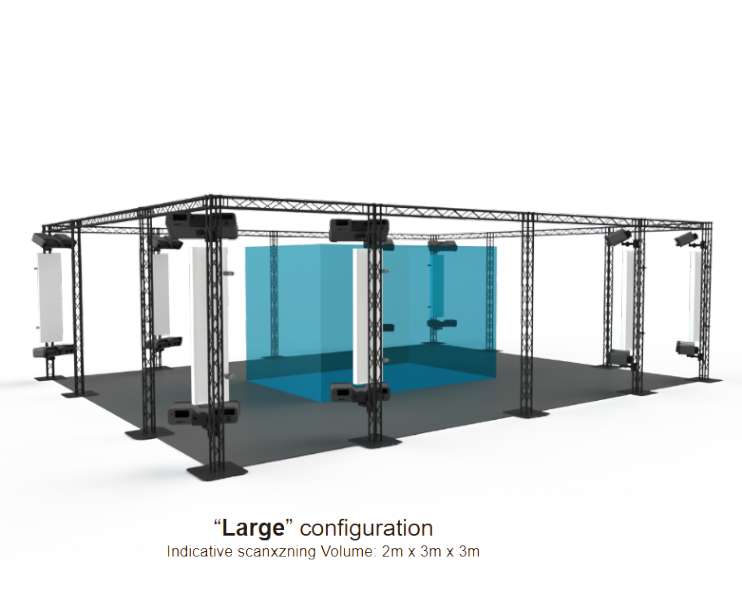
The technology used in this pilot study operates with a 16-module configuration, covering a scanning volume of 2 × 3 × 3 meters.
Data is captured at 178 frames per second, with a spatial resolution of 2 mm, generating meshes of 50,000 points using RGB and infrared cameras.
This technical capacity enables detailed analysis of soft tissue deformation, vibration, and shape changes in the thigh during dynamic running tasks, even under fatigue.
Advantages over traditional methods
Unlike marker-based or 2D approaches, markerless dynamic 3D scanning allows the assessment of the entire tissue surface rather than isolated points. This is particularly relevant when studying neuromuscular fatigue and energy loss associated with soft tissue motion.
Pilot study design
1. Participants and running techniques
Two recreational runners with clearly different foot strike patterns were analyzed:
- Rearfoot strike (RFS)
- Midfoot strike (MFS)
This comparison made it possible to explore how running technique influences thigh soft tissue motion both before and after fatigue.
2. Experimental protocol
The protocol consisted of:
- A standardized 10-minute warm-up.
- Pre-fatigue analysis, with two 5-second recordings at 178 fps.
- A 1-hour run at the runner’s half-marathon pace, reaching a Borg perceived exertion score above 17.
- Post-fatigue analysis, identical to the pre-fatigue measurements.
3. Analyzed variables
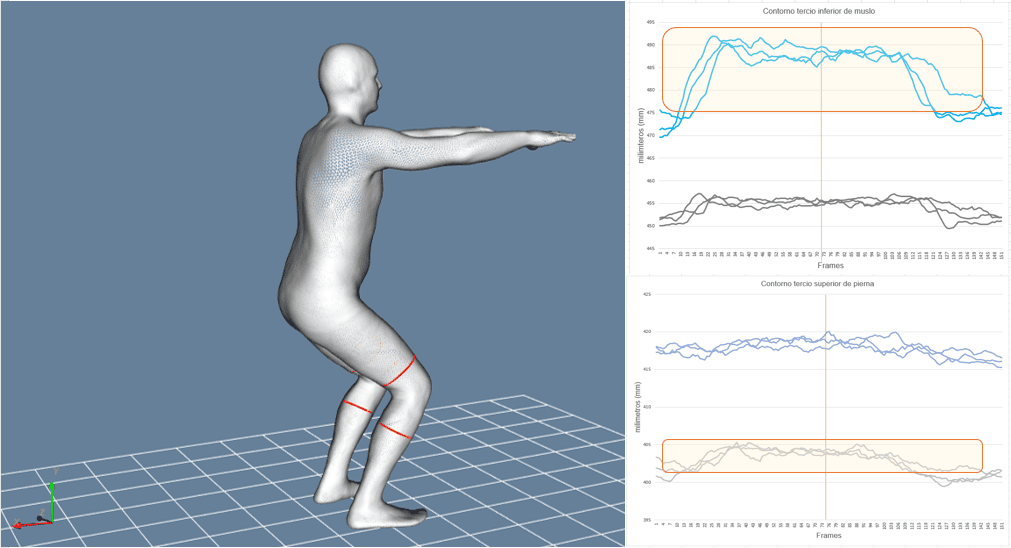
Thigh perimeters were evaluated at 35%, 50%, and 65% of thigh length, together with the Shape Variation Index (SVI), which quantifies tissue shape changes at each level.
Key findings
1. Differences between running techniques
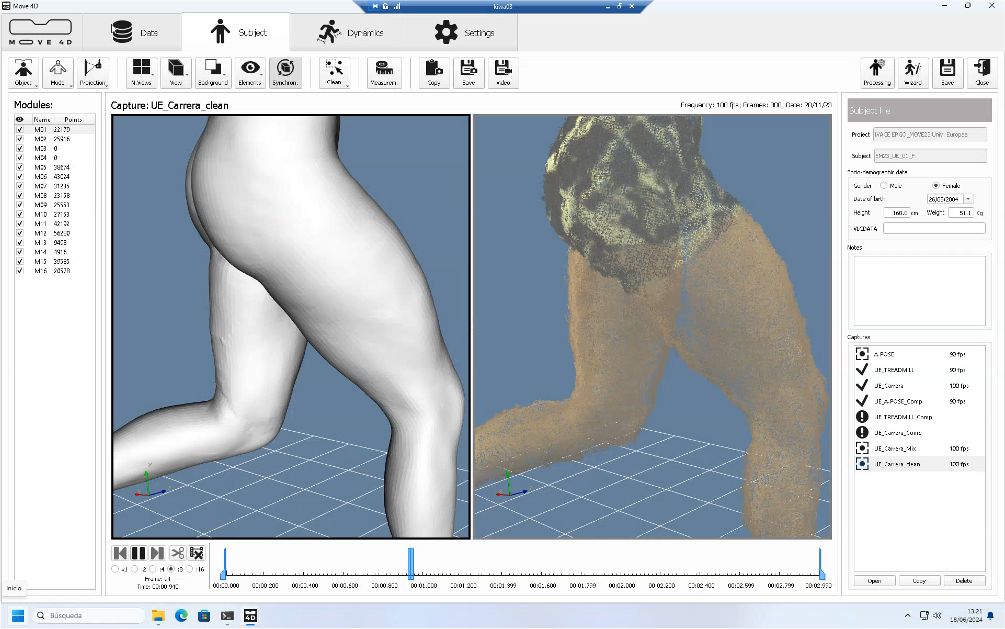
The runner using a rearfoot strike (RFS) consistently showed greater soft tissue movement and shape variation in the thigh compared to the midfoot strike (MFS) runner, both in non-fatigued and fatigued states.
These findings indicate that foot strike pattern has a direct influence on soft tissue vibrations and deformations, with potential consequences for mechanical efficiency and neuromuscular load.
2. Effects of fatigue
Fatigue led to increased soft tissue movement, particularly in the distal thigh region (65%). The SVI values increased in the post-fatigue condition, confirming that fatigue reduces the tissue’s ability to stabilize during running.
This highlights the importance of considering fatigue not only from a muscular or metabolic perspective, but also from a mechanical tissue behavior standpoint.
Other articles that may interest you: MOVE4D version 2.0: Greater precision, smarter automation, seamless Integration
3. The value of 3D scanning for performance analysis
The results demonstrate that Move4D provides a sensitive and innovative methodology for detecting subtle changes in soft tissue motion, adding a new dimension to running biomechanics analysis.
Implications and future applications
Future directions
Building on this pilot study, future research may focus on larger samples, deeper analysis of fatigue effects, and the evaluation of compression garments and their potential role in soft tissue stabilization and energy efficiency.
To learn more about Move4D technology and how it can transform running biomechanics analysis, we invite you to visit our website www.move4d.net
If you have any questions, would like additional information, or are interested in collaboration, please get in touch with us—our team will be happy to provide guidance and discuss how these innovative tools can support your research or training projects.
The full scientific paper underlying this study is available here.