By 2026, we will reach a turning point in applied biomechanics, sports science, ergonomics and product design: markerless motion analysis will no longer be an alternative—it will be the standard for many real-world applications.
From fixed labs to mobile setups. This shift is being driven by rapid advances in computer vision and artificial intelligence, and it directly aligns with the core positioning of MOVE4D.
Top motion capture lab trends in 2026
1.From markers to vision-based motion capture
For decades, passive marker-based systems have been the gold standard for motion analysis. Their accuracy is well established, but so are their limitations:
- Time-consuming subject preparation and marker placement
- Need for highly trained personnel
- Constraint to a permanent laboratory
- Risk of altering natural movement due to markers, clothing constraints or preparation protocols
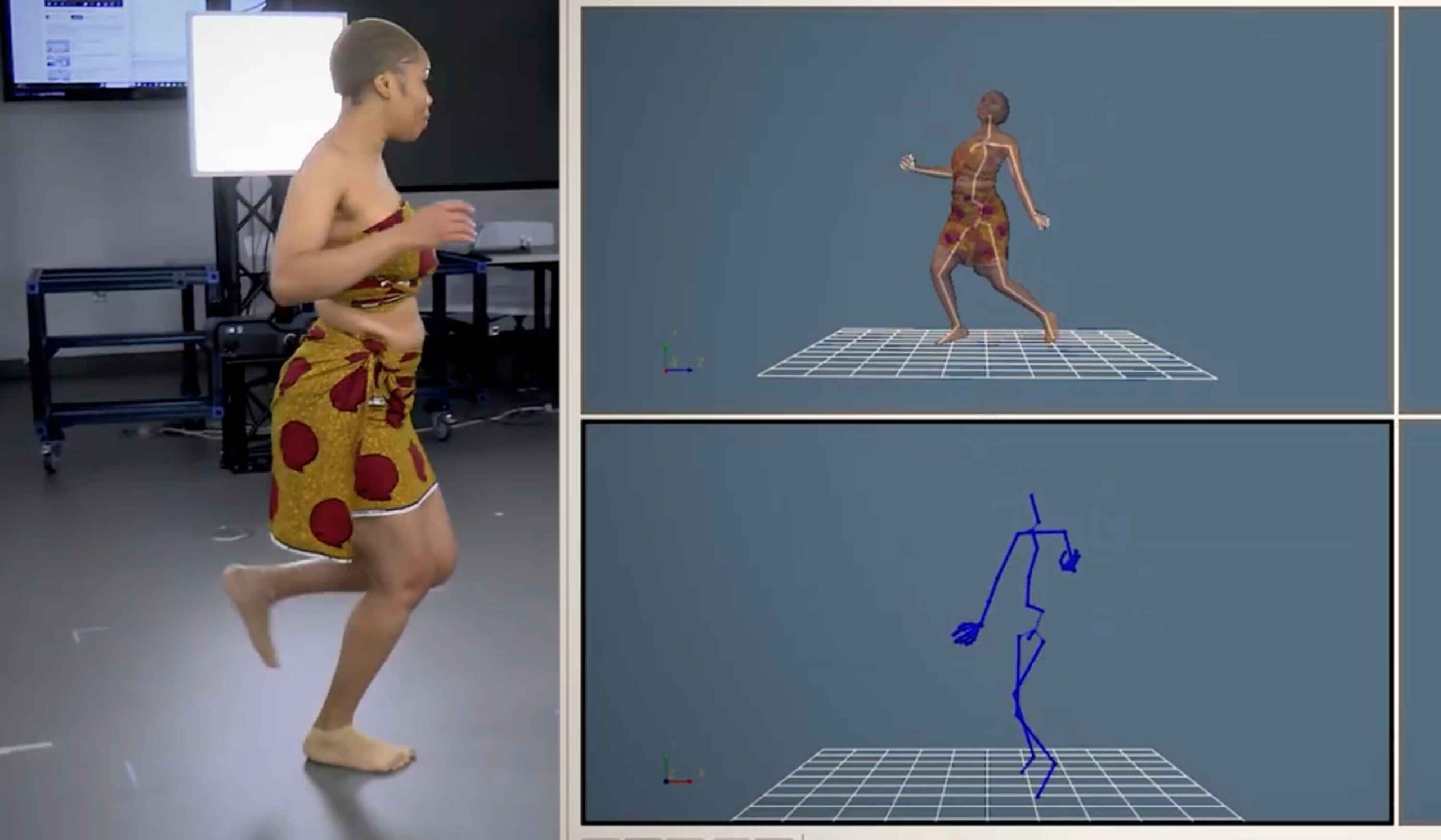
In contrast, markerless systems capture movement without physical contact, allowing people to move naturally and be assessed where movement actually happens.
In 2026, the key question will no longer be “Does markerless work?” but “For which use cases is markerless precise enough—and how do we deploy it at scale?”
You might be interested in: MOVE4D version 2.0: Greater precision, smarter automation, seamless Integration
2.Clinical-grade accuracy is no longer a promise
One of the main barriers to adoption has been accuracy. That barrier is rapidly disappearing.
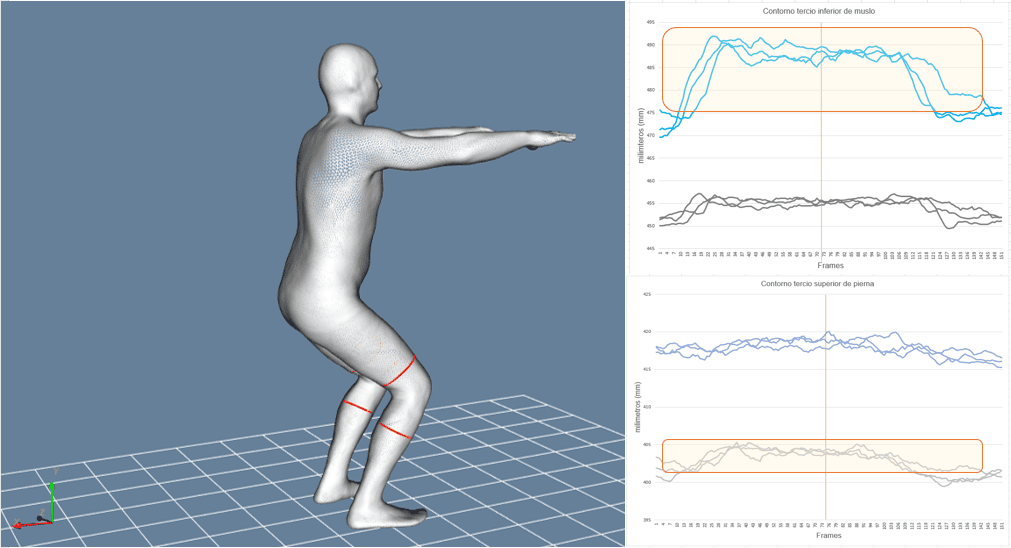
Vision-based systems powered by AI can now identify joint centers, track segments and compute kinematics with clinically relevant precision, even during dynamic and complex movements. As a result, markerless analysis is increasingly accepted not only in research settings, but also in decision-making contexts such as:
- Sports performance and injury prevention
- Functional assessment and rehabilitation
- Ergonomics and occupational risk evaluation
- Product validation and human–product interaction studies
What makes this leap especially relevant is that it comes without compromising movement naturalness.
3.The real breakthrough: leaving the lab
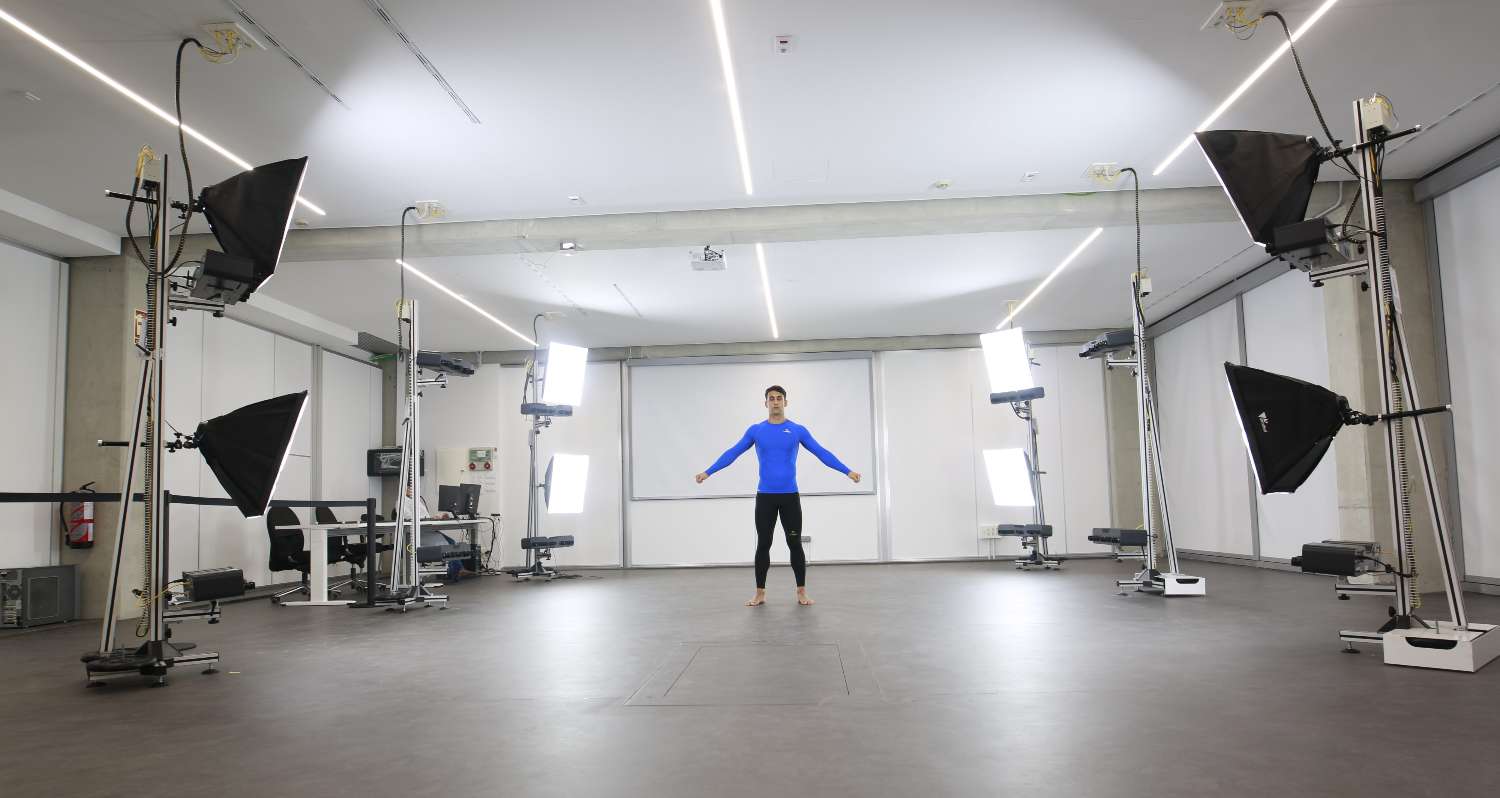
The most disruptive impact of markerless motion analysis in 2026 will be its ability to operate reliably without the need for a permanent, fixed laboratory.
This means bringing the lab to the field to collect high-quality motion human data where it truly occurs.
At the same time, it enables scalability: more users, more sessions, more variability, and richer datasets.
4.Clear value for users and organizations
- Major reduction in setup time and operational complexity
- Fewer resources required per session
- More natural movement patterns
- Easier monitoring and large-scale studies
- Actionable kinematic data closer to real decision points
Markerless systems do not just compete on accuracy—they win on speed, scalability and realism.
Keep reading: MOVE4D and LI-NING drive innovation in sportswear design with a new 4D Body Scanning lab in China
Where MOVE4D fits into the 2026 landscape
As markerless motion analysis becomes mainstream, the real differentiator will not be the absence of markers, but the quality, robustness and usability of the data.
MOVE4D, both permanent and mobile setups, is fully aligned with this evolution:
- Markerless capture focused on high-fidelity motion data
- Designed for demanding applications where accuracy and repeatability matter
- Suitable for deployment beyond the laboratory, without sacrificing scientific rigor
MOVE4D represents the convergence of advanced sensing, AI-driven processing and biomechanical expertise, enabling organizations to move from isolated measurements to scalable, real-world motion intelligence.
Looking ahead
By 2026, markerless motion analysis will not just be a technological upgrade—it will redefine how and where human movement is measured, understood and applied.
With MOVE4D, IBV is already working in that future.
Interested in exploring how markerless motion analysis can fit into your organization?
From IBV, we support sports, industry, retail and R&D teams in defining use cases, protocols and key indicators that truly create value with MOVE4D. Contact us for more information.