A precise bike fit does far more than improve comfort on the saddle. It can influence how the hips and knees move through every pedal stroke, shape pedaling efficiency, and help reduce the mechanical patterns often linked to overuse issues.
When saddle height cycling is assessed with dynamic 4D analysis instead of static observation alone, the picture becomes much clearer.
Why saddle height matters in cycling biomechanics?
In cycling biomechanics, saddle height is one of the most important fit variables. Even small adjustments can change how the lower limbs extend and flex during pedaling, which in turn affects:
- movement quality,
- joint loading,
- and overall riding efficiency.
A rider may feel more stable at one position while still producing less efficient movement patterns or placing unnecessary stress on specific joints.
That is why bike fitting benefits from dynamic measurement. Instead of relying only on visual checks or static angles, motion-based analysis makes it possible to observe what is actually happening throughout the pedal cycle.
A dynamic approach to bike fit with 4D scanning
Modern markerless motion capture cycling tools make it possible to assess the rider in motion without placing physical markers on the body.
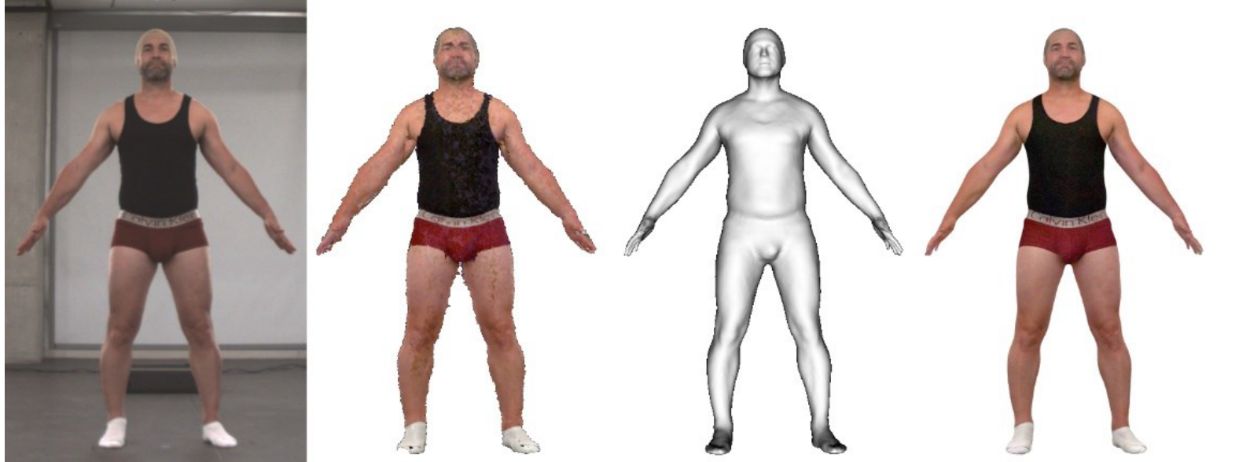
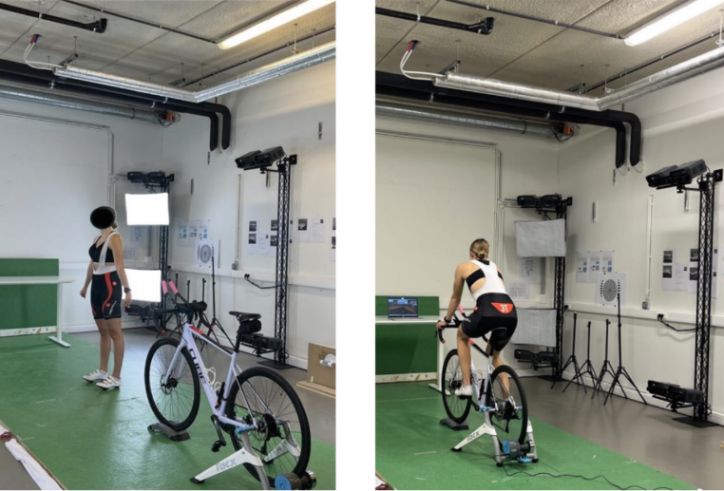
In this case, a MOVE4D based on 4D stereophotogrammetry captures full-body shape and movement at high speed and high precision.
How the system captures movement?
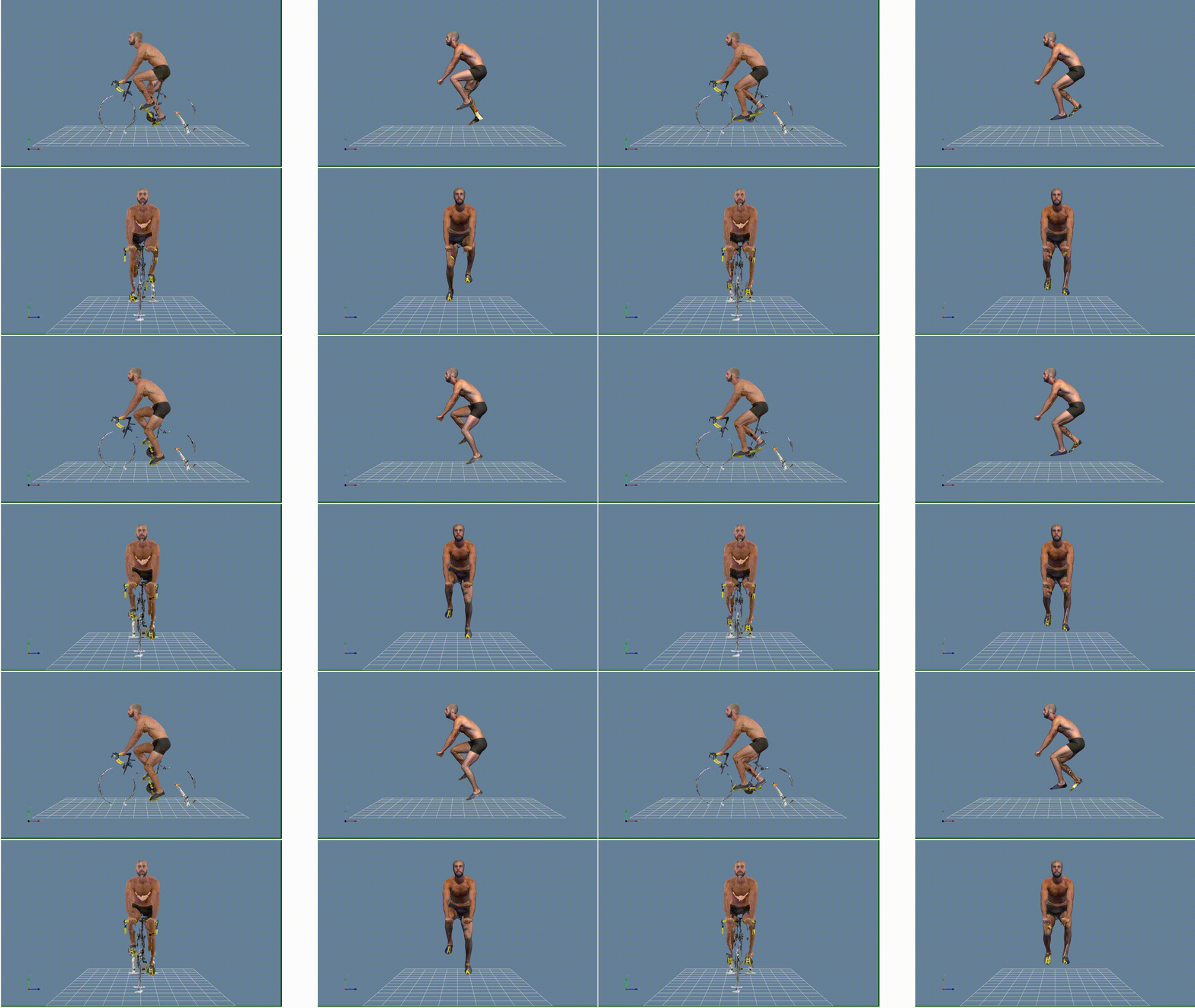
The scanning setup records the cyclist’s full-body dynamics while riding and creates a personalised digital human model. This makes it possible to evaluate:
- hip and knee kinematics,
- left-right symmetry,
- joint range of motion,
- and lower-limb movement throughout the full pedal stroke.
Because the process is markerless, it reduces the variability that can appear when different examiners place markers slightly differently.
What was compared?
The movement data was collected under two different saddle-height conditions:
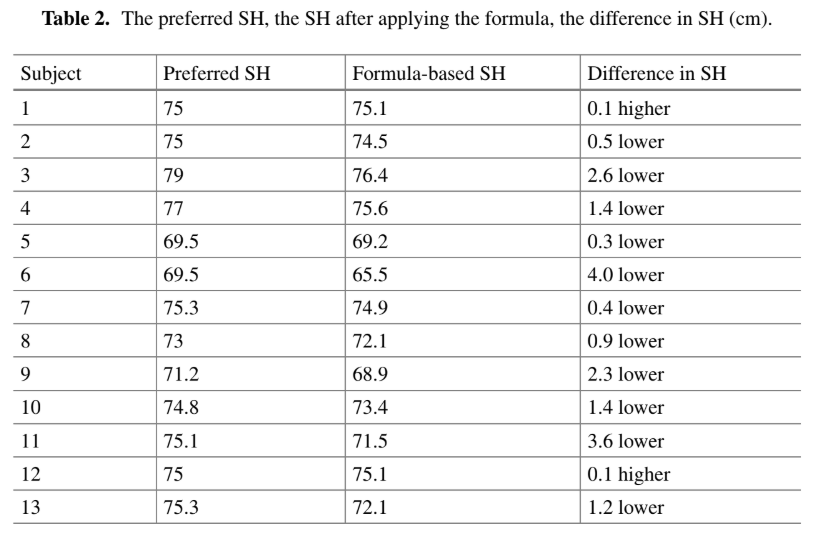
- the rider’s preferred saddle height, chosen for personal comfort
- a formula-based saddle height, calculated from inseam length × 0.883
It reflects the difference between a position that feels best subjectively and one that is set from an anthropometric formula intended to support performance and reduce injury risk.
What changes in knee kinematics tell us?
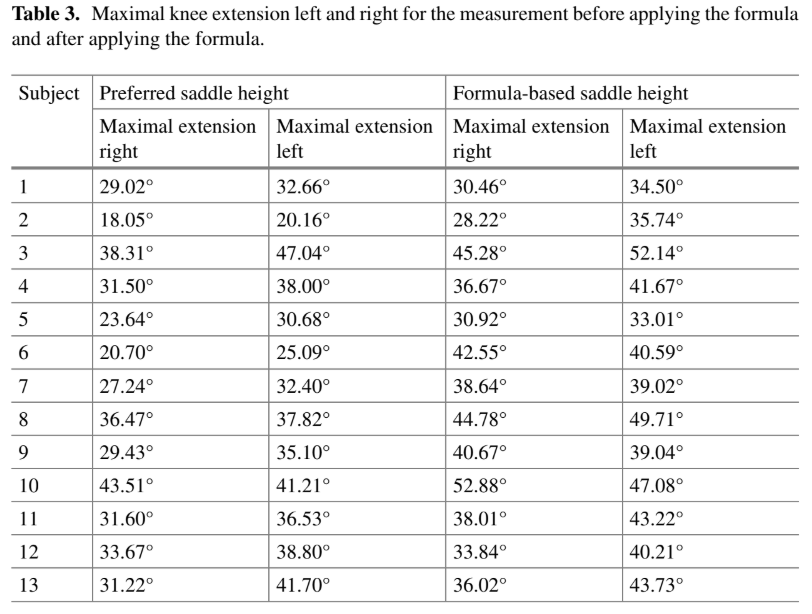
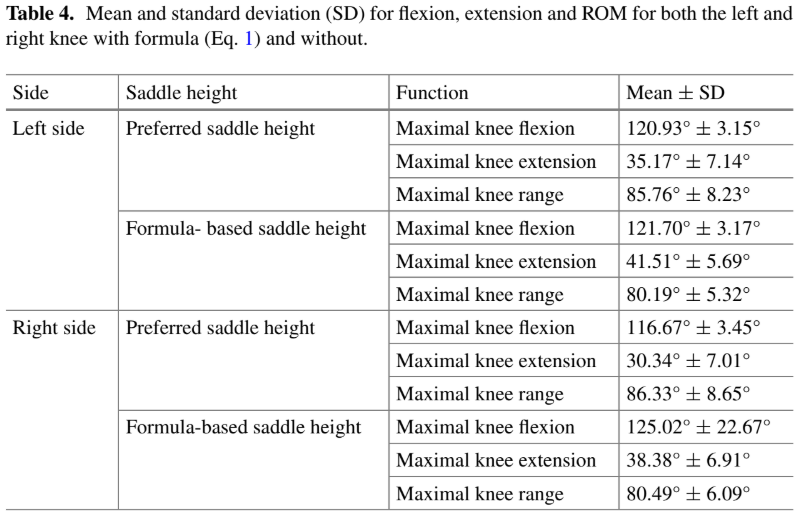
When the formula-based saddle height was used, the movement pattern at knee extension changed significantly on both sides.
Measurable differences in knee extension
The data showed:
- a 6.34° change in left knee extension
- an 8.04° change in right knee extension
These are not trivial shifts. They show that a change in saddle height can meaningfully alter knee kinematics cycling, even when the adjustment itself may look relatively small from the outside.
Why this matters for cycling performance?
From a fitting perspective, knee extension is especially important because it sits at the intersection of:
- comfort,
- force transfer,
- and joint loading.
If saddle height is too low or too high, the rider may compensate in ways that influence efficiency or create unnecessary stress over time.
Hip kinematics also respond to saddle height
The hips showed a more subtle pattern than the knees, but the movement was not identical across both sides.
Subtle changes that still matter
While total hip range of motion did not shift significantly on either side, the right hip did show small but significant differences in flexion and extension:
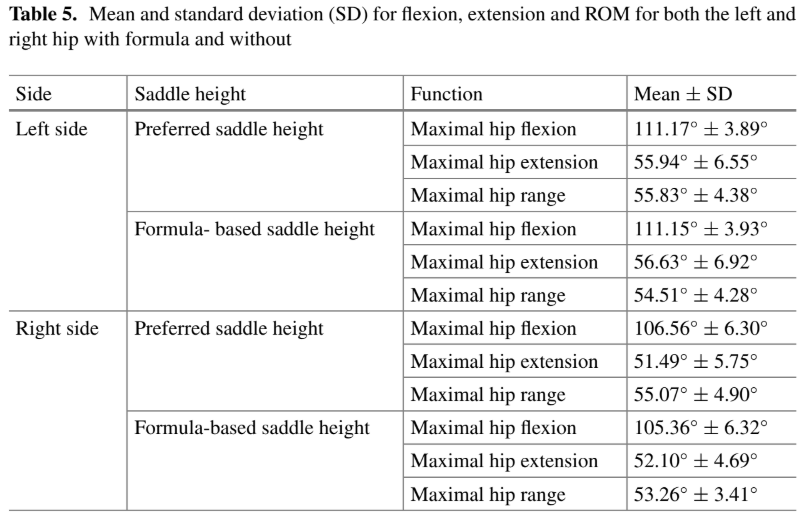
- hip flexion decreased by 1.2°
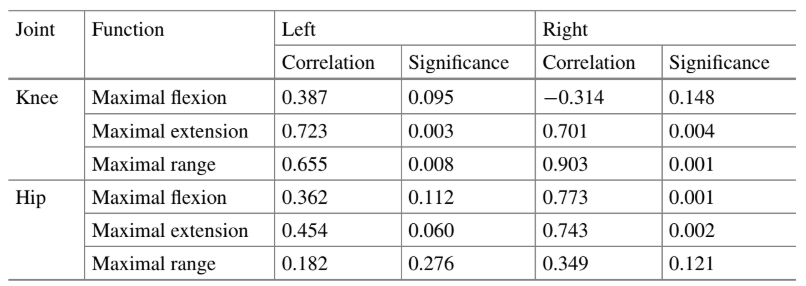
- hip extension increased by 0.61°
In hip kinematics cycling, small variations can influence posture, muscle recruitment, and how force travels through the chain from hip to foot.
Left-right asymmetry should not be ignored
One of the most relevant insights from the movement analysis is that the right and left sides do not always behave the same way.
For bike fit professionals, this matters because a rider should not automatically be treated as fully symmetrical.
A single position may create different demands on each side, and those differences can stay hidden unless the assessment captures movement dynamically.
You might be interested in: Functional ACL assessment using dynamic body surface analysis
Preferred saddle height versus formula-based saddle height
A rider’s preferred position often reflects what feels stable, controlled, or comfortable. That does not necessarily mean it is the most efficient setup from a biomechanical standpoint.
The formula-based approach uses inseam length to estimate saddle height with the goal of improving cycling performance and reducing joint stress.
In the measurements reviewed here:
- the average preferred saddle height was 74.14 cm,
- while the average formula-derived height was 72.72 cm.
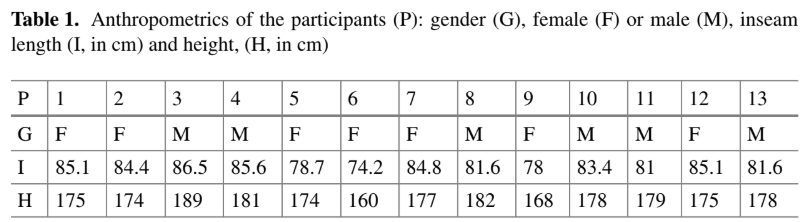
That gap is important. It suggests that real-world rider preference and formula-driven optimisation do not always align.
Some cyclists may naturally choose a slightly lower or more familiar position, even if a different setup changes knee extension in a way that may be more mechanically efficient.
Why markerless motion capture adds value to bike fitting?
A strong bike fit should connect subjective feedback with objective movement data. That is exactly where markerless motion capture stands out.
Key advantages of 4D analysis
With a MOVE4D, it becomes possible to:
- assess movement during the actual pedal stroke
- visualise full-body dynamics with a digital human model
- detect side-to-side asymmetries
- evaluate lower-limb biomechanics in detail
- support more precise fit decisions with measurable data
This is especially relevant for professionals working in cycling injury prevention, performance optimisation, or advanced rider assessment.
What to keep in mind when interpreting saddle-height changes?
Saddle height does not act in isolation. A taller rider on a smaller frame, for example, may shift position on the saddle to reach the bars comfortably, which can affect lower-body kinematics.
That is why saddle-height recommendations work best when they are interpreted within the full context of the rider, the bike, and the movement data.
Practical takeaways
For anyone working with cycling fit, performance, or biomechanics, small saddle-height changes can produce meaningful mechanical differences.
More specifically:
- knee mechanics respond clearly to saddle-height adjustments
- hip mechanics may also shift, even when changes appear subtle
- left-right asymmetries are common enough to deserve attention
- dynamic 4D analysis offers a deeper understanding than static observation alone
When saddle height cycling is assessed through real movement rather than assumption, bike fitting becomes more precise, more individual, and far more informative.
For riders aiming to improve comfort, efficiency, and long-term joint health, that level of detail can make all the difference.
The full scientific paper underlying this study is available here.
References
- Bini, R., Hume, P.A., Croft, J.L.: Effects of bicycle saddle height on knee injury risk andcycling performance. Sports Medicine [Internet]. 41(6), 463–476 (2011). https://doi.org/10.2165/11588740-000000000-00000
- Quesada, J.I.P., Kerr, Z.Y., Bertucci, W.M., Carpes, F.P.: The association of bike fitting with injury, comfort, and pain during cycling: an international retrospective survey. Euro. J. Sport Science [Internet]. 19(6), 842–849 (2018).https://doi.org/10.1080/17461391.2018.1556738
- Millour, G., Duc, S., Puel, F., Bertucci, W.: Comparison of static and dynamic methods based on knee kinematics to determine optimal saddle height in cycling. Acta Bioeng. Biomech. [Internet]. 21(4) (2019). https://doi.org/10.37190/abb-01428-2019-02
- Scoz, R.D., De Oliveira, P.R., Santos, C.S., Pinto, J.R., Melo-Silva, C.A., AFT, D.J., JJB, M., LMA, F., Amorim, C.F.: Long-term effects of a kinematic bikefitting method on pain, comfort, and fatigue: a Prospective cohort study. Int. J. Environ. Res. Public Health [Internet]. 19(19), 12949 (2022). https://doi.org/10.3390/ijerph191912949
- Encarnación-Martínez, A., Ferrer-Roca, V., García-López, J.: Influence of sex on current methods of adjusting saddle height in indoor cycling. J. Strength Conditio. Res. [Internet]. 35(2), 519–526 (2018). https://doi.org/10.1519/jsc.0000000000002689
- Nordeen-Snyder, K.S.: The effect of bicycle seat height variation upon oxygen consumption and lower limb kinematics. Med. Sci. Sports Exercise [Internet]. 9(2), 113–117 (1977). https://doi.org/10.1249/00005768-197709020-00008
- Lee, J., Park, K.: Modeling cycling performance: effects of saddle position and cadence on cycle pedaling efficiency. Science Progress [Internet]. 104(4) (2021). https://doi.org/10.1177/00368504211041495
- Bini, R.: Influence of saddle height in 3D knee loads commuter cyclists: a statistical parametric mapping analysis. J. Sports Sci. [Internet]. 39(3), 275–288 (2020). https://doi.org/10.1080/02640414.2020.1816289
- Julious, S.A.: Sample size of 12 per group rule of thumb for a pilot study. Pharm. Stat. 4(4), 287–291 (2005). https://doi.org/10.1002/pst.185
- Scataglini, S., Abts, E., Van Bocxlaer, C., Van den Bussche, M., Meletani, S., Truijen, S.:Accuracy, validity, and reliability of markerless camera-based 3D motion capture systems versus marker-based 3D motion capture systems in gait analysis: a systematic review and meta-analysis. Sensors. 24(11), 3686 (2024). https://doi.org/10.3390/s24113686
- Applications of using 4D scanning technologies in biomechanics. (n.d.). springerprofessional.de. https://www.springerprofessional.de/en/applications-of-using-4d-scanning-technologies-in-biomechanics/25818912
- Meletani, S., Scataglini, S., Mandolini, M., Scalise, L., Truijen, S.: Experimental comparison between 4D stereophotogrammetry and inertial measurement unit systems for gait spatiotemporal parameters and joint kinematics. Sensors. 24(14), 4669 (2024). https://doi.org/10.3390/s24144669
- Scataglini, S., Paul, G. (eds.): DHM and Posturography. Academic (2019)
- Scataglini, S., Truijen, S.: Overview of software and file exchange formats in 3D and 4D body shape scanning. In: Proceedings of the 7th International Digital Human Modeling Symposium (Vol. 7, No. 1). University of Iowa (2022, August).
- Scataglini, S., Truijen, S.: Critical appraisal of using digital human model, virtual human, human digital twin and digital twin. In: International Conference on Digital Human Modeling, pp. 154–158. Springer, Cham (2023)
- Scataglini, S., Paul, G.: From Greek sculpture to the digital human model–a history of “human equilibrium”. Academic, London (2019)
- The MathWorks Inc: MATLAB version: 9.13.0 (R2023b). The MathWorks Inc., Natick (2023) https://www.mathworks.com
- 18. IBM Corp. Released 2023. IBM SPSS Statistics for Windows, Version 29.0.2.0 Armonk: IBM Corp
- 19. Ross, A., Willson, V.L.: Paired Samples T-Test, pp. 17–19. SensePublishers eBooks (2017). https://doi.org/10.1007/978-94-6351-086-8_4
- Cordillet, S., Bideau, N., Menard, M., Nicolas, G.: Gyro-based lower limb asymmetry during a 4-km time trial on a velodrome among high level female cyclists. Comput. Meth. Biomech. Biomed. Eng. 22(sup1), S352–S353 (2019). https://doi.org/10.1080/10255842.2020.1714941
- Holmes, J.C., Pruitt, A.L., Whalen, N.J.: Lower extremity overuse in bicycling. Clin. Sports Med. 13(1), 187–205 (1994)
- Abt, J.P., Smoliga, J.M., Hutton, D.L., Walters, B.C., Jolly, J.T., Lephart, S.M., Fu, F.H.: Cycling mechanics symmetry in competitive cyclists: 1356. Med. Sci. Sports Exerc. 38(5), S180 (2006)
- Ferrer-Roca, V., Roig, A., Galilea, P., García-López, J.: Influence of bike-fit on performance and comfort in cycling time-trial. J. Sports Sci. 32(15), 1361–1367 (2014). https://doi.org/10.1080/02640414.2014.889846