On December 4th, the Institute of Biomechanics (IBV) hosted the webinar
“4D Human Body Scanning: Redefining Apparel Fit Through Dynamic Digital Human Modeling”, delivered by Sandra Alemany, Lead Researcher in Advanced Anthropometry, and Juan Carlos González, Director of Innovation for Apparel & Footwear at IBV.
The session explored how 4D body scanning technology is transforming the way the apparel industry understands, evaluates, and designs garment fit, by moving beyond static measurements and embracing the reality of human movement.
Why is fit still a challenge in the apparel industry?
Over the past two decades, large-scale 3D body scanning campaigns have generated massive anthropometric databases worldwide. Yet, poor fit remains one of the main drivers of customer dissatisfaction and product returns, particularly in e-commerce.
As highlighted during the webinar, the reason is clear: fit is not a static phenomenon.
Garment fit results from a complex interaction between:
- Body dimensions and body shape variability.
- Personal fit preferences.
- Pattern design, grading rules and ease.
- Textile properties.
- And, crucially, how the body moves while wearing the garment.
From static bodies to dynamic digital humans in apparel fit
Sandra emphasized that traditional anthropometry alone is not enough to predict real garment performance.
During movement, the human body undergoes significant shape changes and soft-tissue deformations, with dimensional variations of several centimeters in key areas such as arms, legs, hips, and torso.
To truly understand fit, the industry needs to capture body shape in motion.
This is where 4D body scanning comes into play, enabling:
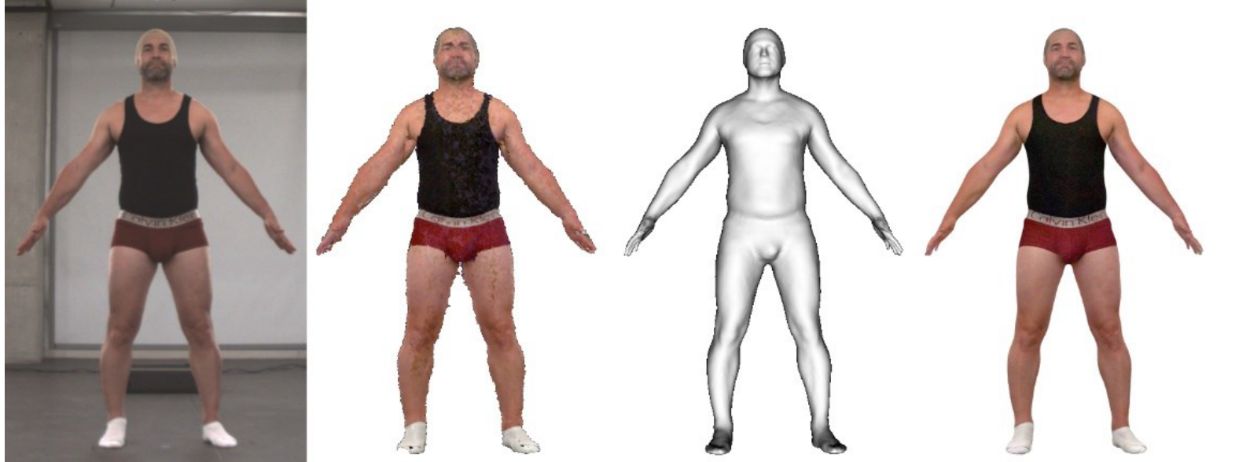
- Accurate capture of real human morphology.
- Continuous tracking of shape changes during movement.
- Quantification of soft-tissue deformation.
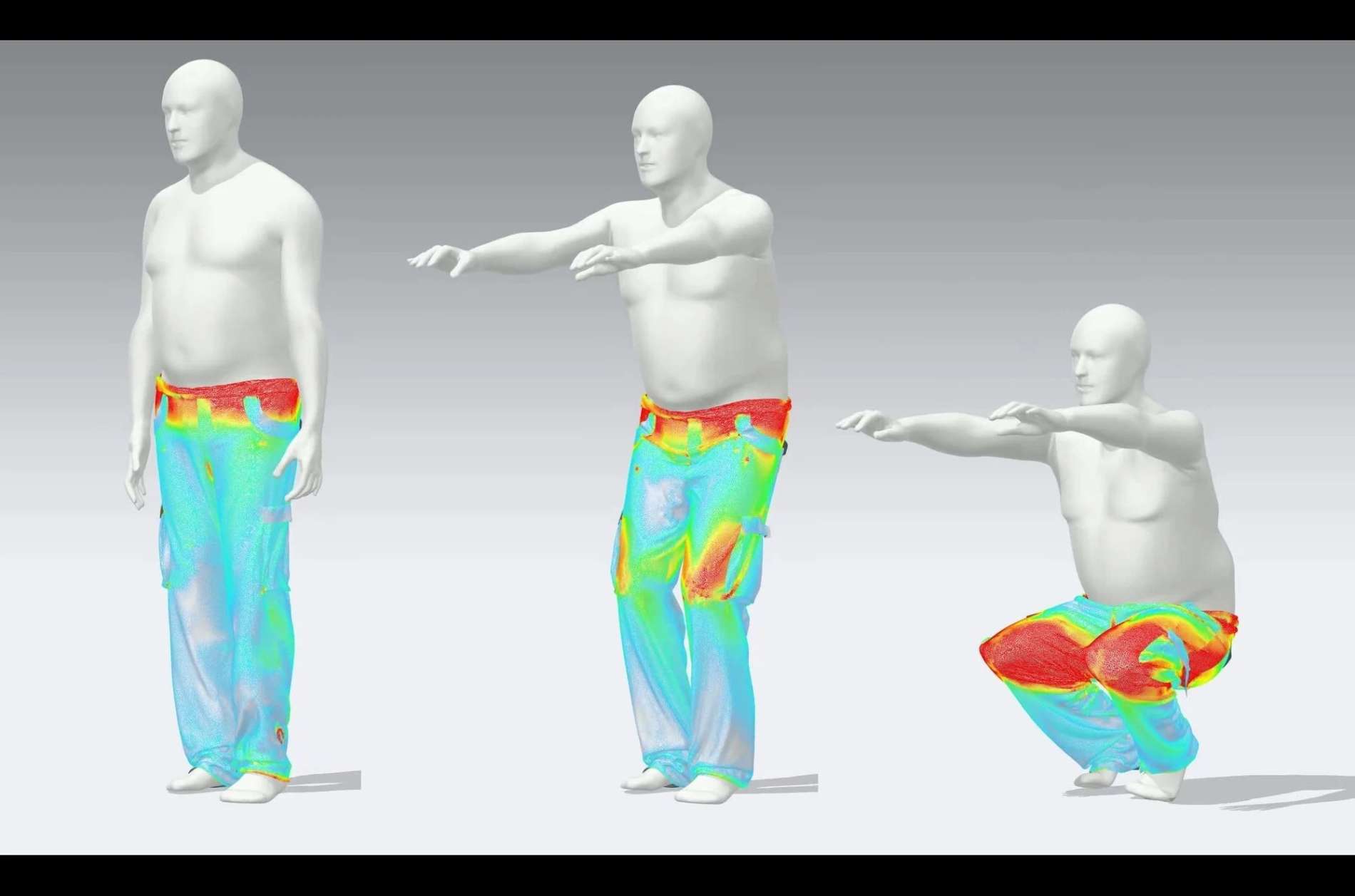
- Objective analysis of body–garment interaction under dynamic conditions.
MOVE4D: creating digital life-fit models
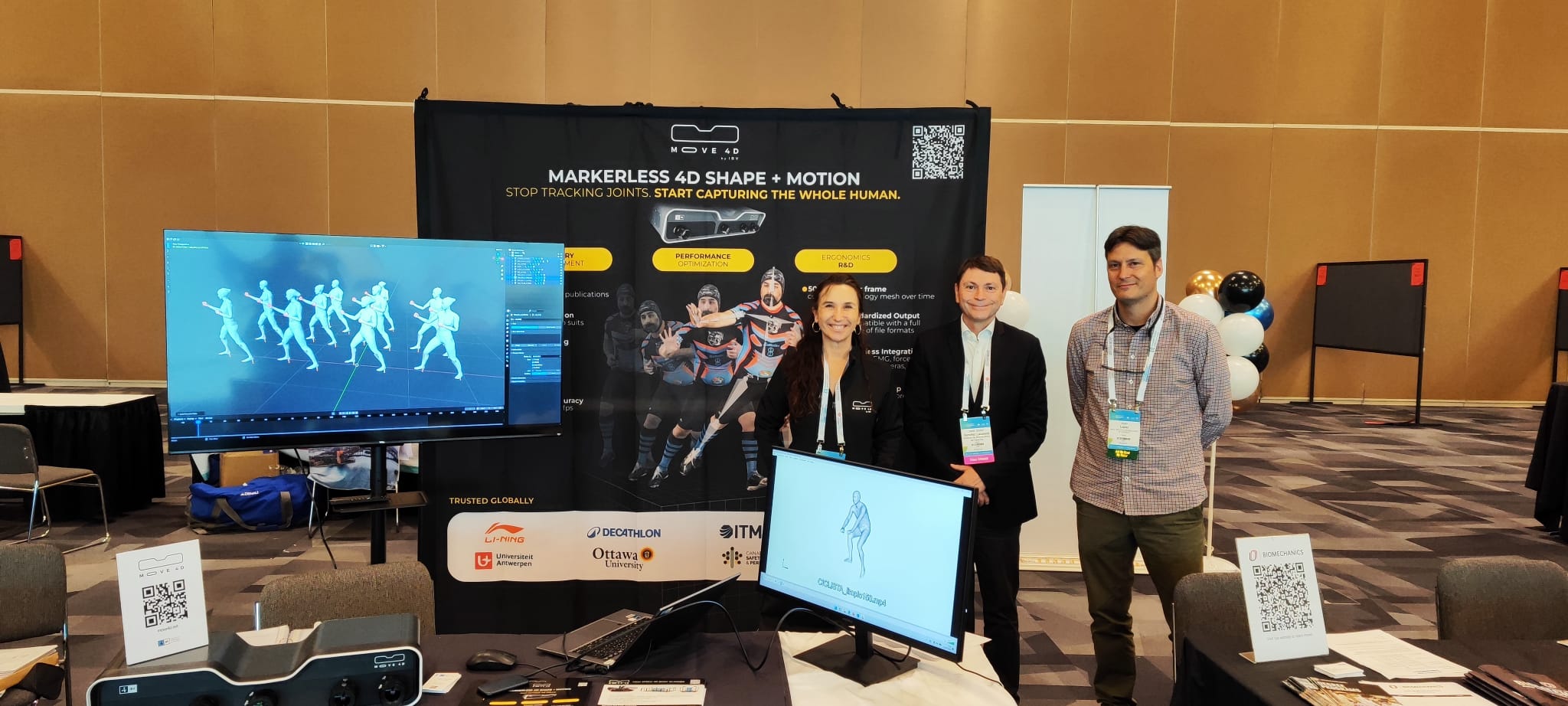
During the webinar, Sandra presented MOVE4D, IBV’s proprietary 4D body scanning system, designed to generate high-fidelity dynamic digital human models.
MOVE4D enables:
- Full-body motion capture at up to 178 frames per second.
- Sub-millimeter accuracy (<1 mm).
- Large scanning volumes (up to 2 × 3 × 3 m).
- Anatomically consistent avatars with invariant topology and internal skeletons.
These digital life-fit models can be directly integrated into leading garment simulation platforms such as CLO3D, Browzwear, Optitex or Style3D, enabling realistic virtual fit assessments.
Accurate fit simulation is only possible when both body shape and body motion are captured with high fidelity.
Discover more about our product and all its capabilities here
Digital fit assessment: accelerating apparel development without replacing physical testing
One of the core messages of the webinar was clear: digital fit assessment does not replace physical fitting trials—it accelerates them.
By integrating 4D avatars into the design workflow, companies can:
- Test garments on multiple body types and morphotypes.
- Identify fit issues in static and dynamic conditions.
- Quantify tightness, looseness, gaps and material stretch.
- Reduce the number of costly physical iterations.
These results in shorter development cycles, lower costs, and better-informed design decisions, while maintaining the reliability of physical validation.
Towards intelligent, data-driven apparel design
Looking ahead, the combination of 4D anthropometry, virtual fit simulation and quantitative fit metrics opens new opportunities for the apparel industry:
- Pattern and grading optimization.
- Objective fit benchmarking across styles and brands.
- Improved size recommendation systems.
- More inclusive sizing strategies.
- Reduced return rates and environmental impact.
- A gradual shift from ready-to-wear to made-to-order production models.
You might be interested in: MOVE4D version 2.0: Greater precision, smarter automation, seamless integration
Beyond fit: product innovation
The webinar also showcased how MOVE4D supports product innovation, particularly for garments in close contact with the body, such as compression wear and underwear.
Using 4D scanning, IBV can:
- Quantify the biomechanical effects of compression garments.
- Measure changes in body shape and variability during movement.
- Analyze differences before and after fatigue.
- Compare materials, designs and sizes using objective metrics.
The human body is not a static mannequin. It moves, deforms, and adapts—and apparel design must reflect that reality.
The MOVE4D webinar clearly demonstrated how 4D body scanning is reshaping apparel fit assessment, enabling faster, more accurate and more inclusive design processes grounded in real human movement.
Interested in applying 4D body scanning to improve apparel fit and product development?
IBV supports brands, manufacturers and research organizations with:
- Dynamic fit studies.
- Generation of 4D avatars databases for target populations.
- Virtual and physical fit validation.
- Data-driven product innovation.
Get in touch with us and start designing for bodies in motion.