We are excited to officially announce the release of MOVE4D v2.0, the most advanced version of our dynamic human body scanning system to date.
This major update brings new analytical capabilities, enhanced automation, improved visual outputs, and broader compatibility with industry-standard 3D formats.
All of them are designed to help professionals in industries such as biomechanics, apparel, ergonomics and computer graphics capture, understand, and apply 4D body data in their research with greater ease and fidelity.
Key features in MOVE4D v2.0
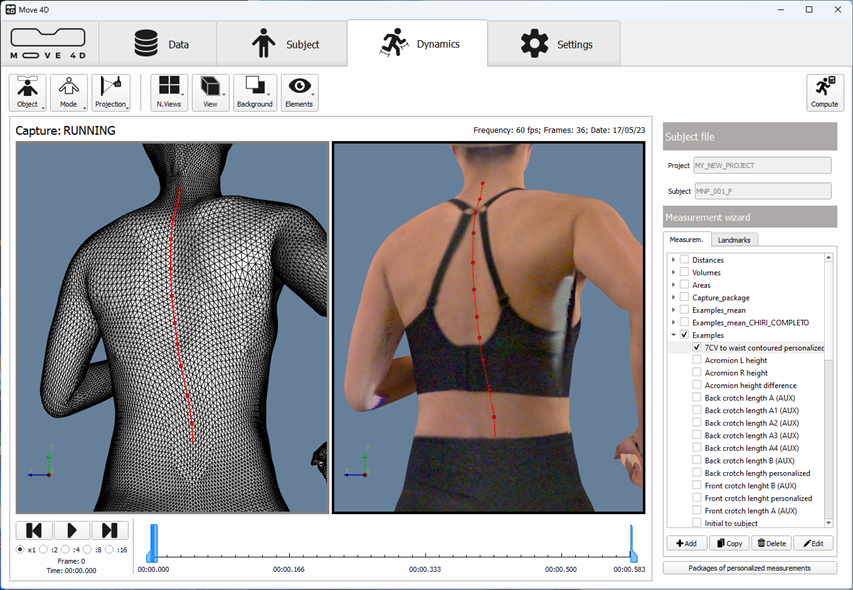
1. Advanced anthropometry: volumes and surface areas by segment
MOVE4D now calculates volumetric and surface area measurements segmented by body region.
This feature enhances applications in product design, health monitoring, and performance analysis by providing richer body information insights — both in static and dynamic contexts.
2. Extended static measurements
Version 2.0 adds new anthropometric measurements aligned with ISO standards and large-scale studies.
These include 35 additional dimensions delivering faster, more comprehensive data sets for those involved in sizing, fitting, or human factors research.
3. Expanded export formats: USD and Alembic
Integration with digital workflows is now even easier.
MOVE4D supports export in .abc (Alembic) and .usd (Universal Scene Description) formats, allowing seamless import into platforms like Unreal Engine, Unity, Blender, and others.
Exports include textures, blendshapes, skeletons, and transitions from A-pose — optimized for animation pipelines and digital humans.
4. Smarter calibration verification
Users are given more information about calibration status allowing for quicker response and ensuring accurate recalibration.
This reduces capture errors and improves overall session reliability.
5. Enhanced mesh rendering
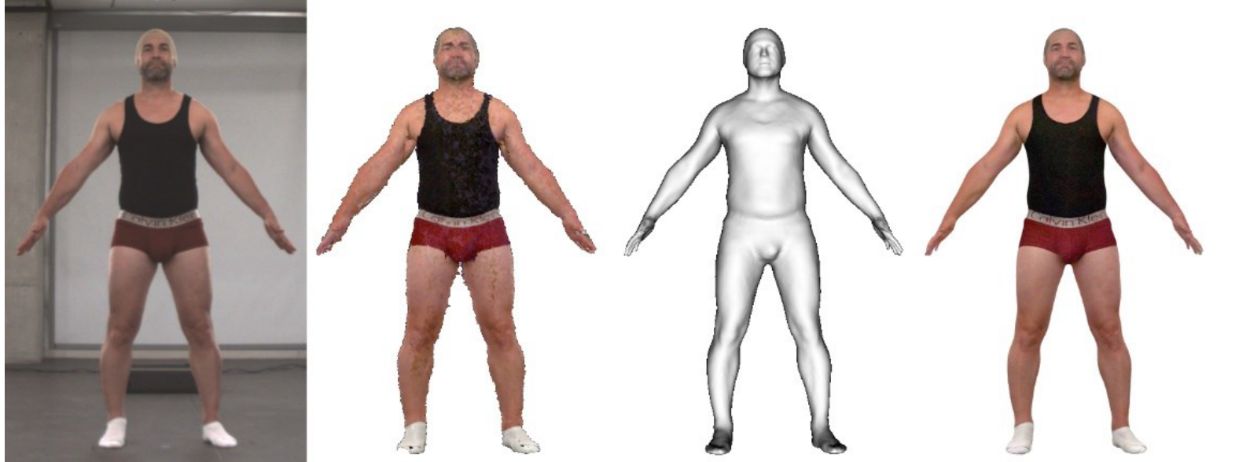
Version 2.0 refines the visualization engine, delivering higher-resolution meshes with realistic textures and improved lighting neutrality — helping users better inspect surface details and validate results at a glance.
6. A stronger, smarter processing engine
The third-generation processing engine introduces improved soft tissue modeling, better handling of wrist and hand-body transitions, and more stable frame-by-frame reconstruction, even in challenging dynamic captures.
These improvements reduce mesh artifacts and increase processing success rates across all capture types.
It may interest you: MOVE4D and LI-NING drive innovation in sportswear design with a new 4D Body Scanning lab in China
Optional add-on modules
- Personalized Measurements
Define your own measurements based on key landmarks, build custom measurement kits, and apply them across captures — including 4D sequences — automatically.
- Automatic Objects Removal with AI
This AI-powered module enables automatic removal of objects or noise from raw scans with minimal manual intervention.
It’s already effective in most scenarios and is being refined further for longer and more complex sequences.
Designed for demanding applications
MOVE4D v2.0 has been developed with input from leading experts and partners across fields such as:
- Technical clothing and PPE design.
- Sports and clinical biomechanics.
- Ergonomic assessment and product testing.
- XR/VR pipelines and digital human modeling.
- Anthropometric research and human surveys.
It’s a robust, research-grade tool that now provides even greater flexibility, automation, and interoperability.
MOVE4D v2.0 is available now, and it is included in all active MOVE4D Service Plans.
For early access, training, or demo requests, contact your MOVE4D representative.
Let’s move the world forward — in 4D.